
A Beginner's Running Shoe Guide: How to Choose by Foot Shape, Weight, and Budget
💡 Key Summary
✅ Running in regular sneakers strains your knees and ankles. Dedicated running shoes absorb 30% more impact
✅ Knowing your own foot shape first (normal·flat·high arch) makes it obvious which running shoe suits you
✅ For beginners, a cushioned running shoe in the 150,000–200,000 KRW range is the safest bet. Brand is a secondary concern
"Can you recommend some running shoes?" is the question I hear most from friends who've just started working out. This article is for beginners who need to buy their first running shoes, and for anyone whose knees have started aching from running in regular sneakers. Rather than recommending a specific brand or model, I'll walk you through the criteria for choosing the running shoe that's right for you — so you won't be confused next time you buy a pair, either.
1. Why Do Regular Sneakers Cause Injuries?
Sneakers and running shoes may look similar, but their impact-absorption ability is completely different. Each running stride lands on your foot with 2.5–3 times your body weight. When a 60 kg adult runs 1 km — about 1,500 steps — that's 150–180 kg of impact hitting the foot every single time.
| Item | Regular sneakers | Running shoes |
|---|---|---|
| Midsole thickness | 1–2 cm | 2.5–4 cm |
| Cushioning material | Usually EVA | High-rebound foam·air·gel |
| Impact absorption | 50–60% | 70–85% |
| Heel-to-toe drop | Almost none | 4–12 mm |
| Weight (at 270 mm) | 350–450 g | 230–330 g |
Running 5 km a day in regular sneakers makes injuries like runner's knee, plantar fasciitis (sole), and shin splints (shin) likely within 1–2 months. The injury mechanisms are covered in detail in the Injury Prevention Guide.
2. The 4 Key Criteria for Choosing Running Shoes
Walk into a running shoe store and the jargon can be overwhelming. You only need to know these four essentials.
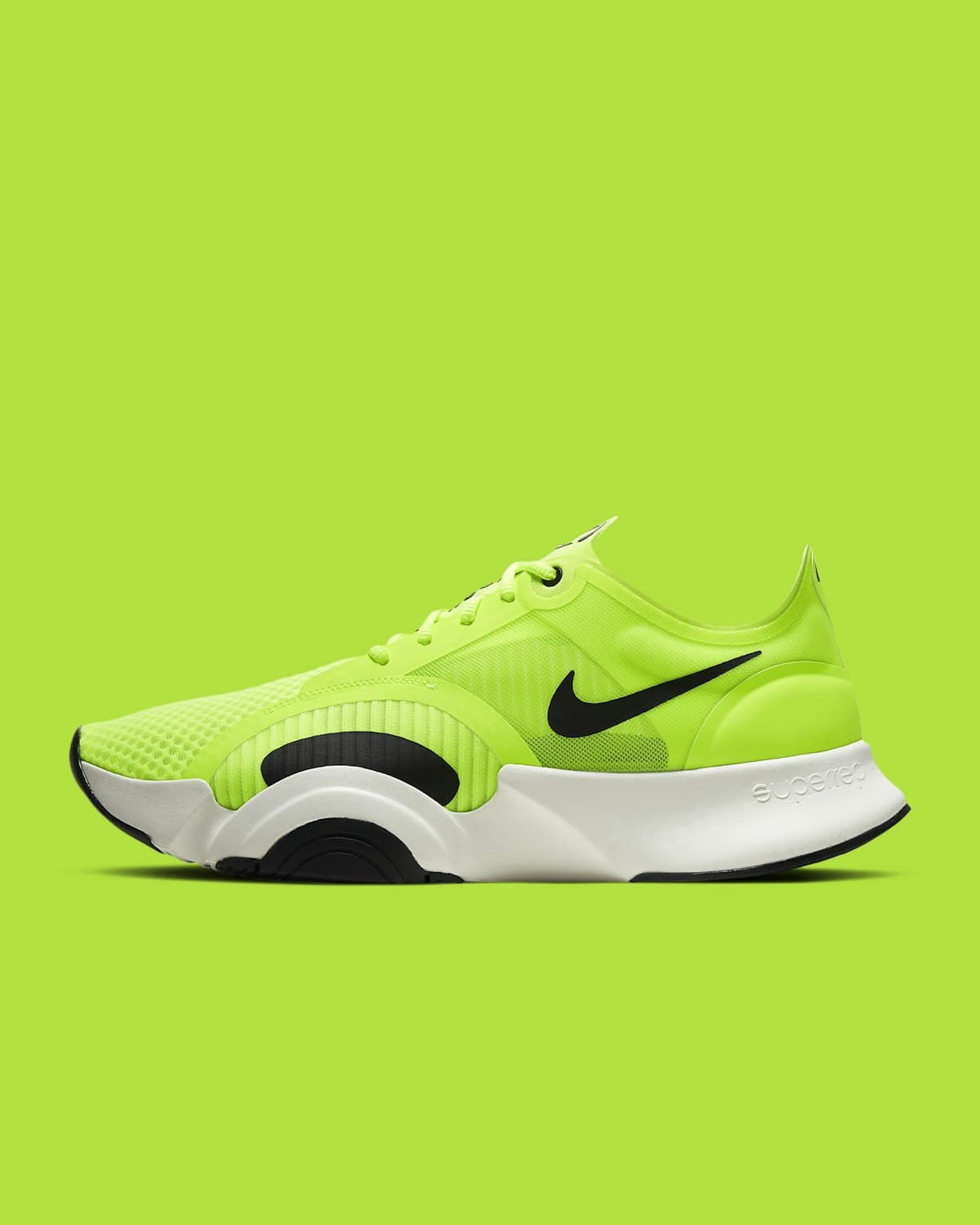
① Cushioning
This is how much impact is absorbed when your foot strikes the ground. The softer it is, the better for beginners. A plush shoe protects your knees and joints. That said, if it's too soft, your foot wobbles inside the shoe and stability drops.
- High cushioning: Beginners, 60 kg and up, mostly long distances
- Medium cushioning: A safe choice for all beginners
- Low cushioning: Experienced runners doing fast paces and short distances
② Heel-to-Toe Drop
This is the height difference between the heel and forefoot. It's usually built between 4 and 12 mm.
- 8–12 mm: Makes heel-strike landing feel natural. Recommended for beginners
- 4–6 mm: Suits midfoot/forefoot landing. Uses your calf muscles more
- 0 mm (zero drop): A near-barefoot sensation. Beginners should avoid this entirely
③ Stack Height
This is the total thickness of the midsole. The higher it is, the plusher but heavier.
- 30 mm and up: Long distance, high cushioning. Good for recovery
- 20–28 mm: The most versatile range for beginners
- Under 20 mm: For fast paces only. Weak impact absorption
④ Midsole Material
- EVA foam: The most common basic material. Good value for money
- High-rebound foam (PEBA·composite foams): Lighter with more energy return. Higher price
- Air units·gel: Enhanced cushioning in the heel area
For beginners, high-rebound foam or standard EVA with medium cushioning is plenty. Premium running shoes with carbon plates are made for runners in the 4–5 min/km pace range, so they're overkill for a beginner.
💡 Tip
Start with a "plush, versatile shoe" at first. The efficient approach is to run for six months, get a feel for your own landing habits and where you feel pain, and then dial in the details with your second pair.
3. A Self-Check for Your Foot Shape
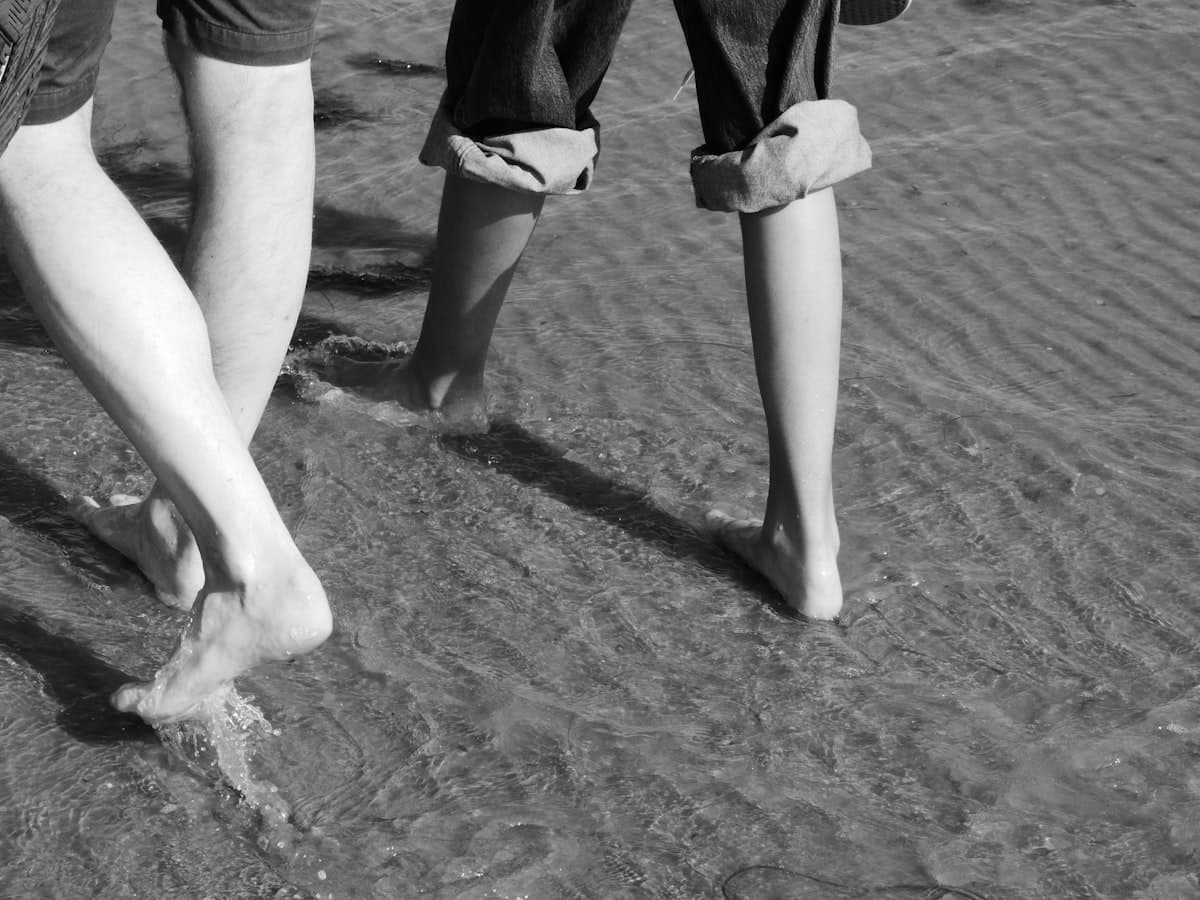
Even at the same size, the right shoe changes with your foot shape. You can self-diagnose in 5 minutes with a single sheet of paper.
The Footprint Test
- Place a sheet of A4 paper on the floor
- Lightly wet the sole of your foot with water
- Step naturally onto the paper
- Check the shape of your footprint
Characteristics and Recommended Shoes by Foot Shape
| Foot shape | Characteristics | Footprint | Recommended running shoe |
|---|---|---|---|
| Normal Arch | A moderate arch | The middle of the sole is about 50% filled in | Neutral cushioning |
| Flat Foot / Low Arch | Almost no arch | Nearly the entire sole is filled in | Stability — reinforced on the inner side |
| High Arch | A very high arch | The inner side of the foot barely touches | High cushioning + emphasis on flexibility |
If you have flat feet, a stability running shoe reinforced on the inner side — as resources from the Korean Foot and Ankle Society suggest — is a good fit. In regular shoes, your foot collapses inward, making knee and lower-back pain likely.
With a high arch, impact concentrates on the outer side of the foot, so little-toe and ankle injuries are common. High cushioning + a flexible midsole is the answer.
4. Recommended Categories by Body Weight and Running Distance
Your body weight and how far you run at a time also affect your shoe choice.
| Weight | Short (5 km or less) | Medium (5–10 km) | Long (10 km or more) |
|---|---|---|---|
| Under 60 kg | Medium cushioning, lightweight | Medium cushioning | Medium–high cushioning |
| 60–75 kg | Medium cushioning | Medium–high cushioning | High cushioning |
| 75 kg and up | High cushioning + stability | High cushioning | High cushioning + stability essential |
The heavier you are, the greater the impact on your feet. If you're 75 kg or more, be sure to start with high cushioning. Reaching for a lightweight racing shoe too soon often ends in blown-out knees.
If you mostly run long distances (like a 10K 8-Week Training plan), cushioning takes priority over weight. Since you'll wear the shoe for close to an hour each time, foot fatigue hits you directly.
5. 5 Checkpoints for Trying Shoes On In-Store
It's fine to buy online, but for your first running shoes, we strongly recommend trying them on in a store. Even at the same size, width and instep height differ by brand.
- Visit in the evening: Feet swell about 1 cm over the course of a day. Going in the evening gives you a size closer to your actual running state.
- Bring the running socks you usually wear: Store socks are usually thin, so the fit differs from reality.
- About 1 cm of toe room: There should be about 1 cm (one thumb-joint) of space in front of your big toe. This prevents bruised toenails on downhills.
- Actually run in the store: A good store will let you run even a short distance. Walking and running feel completely different.
- Try both shoes on: Most people's feet differ slightly in size. Choose your size based on the larger foot.
⚠️ Caution
"Your usual shoe size + 5 mm" is treated like gospel, but the differences between brands are large. Even at the same 270 mm, some brands run small and some run large. Trust how it actually feels on your foot over the number.
6. Suitable Categories for Beginners by Price Range
It's more sensible to decide on a price range before a brand.
| Price range | Who it suits | Features |
|---|---|---|
| 100,000s KRW | Light entry, 1–2 times a week, 5 km or less | Basic cushioning, EVA midsole, good value |
| 150,000–200,000 KRW | The safest zone for beginners | High-rebound foam, balanced stability and cushioning |
| 250,000–300,000 KRW | 3+ times a week, taking on 10K and beyond | Latest midsole tech, lightweight |
| 300,000 KRW and up | Race-only with carbon plates, etc. | Overkill for beginners |
At first, the 150,000–200,000 KRW range is the answer. Too cheap and the cushioning is weak; too expensive and a beginner can't feel the difference. The most sensible move is to run for about six months, get a sense of your preferences (lightweight vs. plush, fast pace vs. long distance), and then dial in the details with your next pair.
Don't worry too much about the brand. The major global and domestic brands (Nike, Adidas, Asics, New Balance, Hoka, On, Brooks, and more) all make solid beginner lines in the 150,000–200,000 KRW range. The right answer is whichever brand has a line that fits your foot shape.
7. When to Replace Them, and How to Care for Them
Running shoes are a consumable, too. Keep running in worn-out shoes and they lose their protective function, raising injury risk.
Replacement Signs
- 500–800 km of cumulative distance: The most common benchmark. At 5 km three times a week, that's about 8 months to a year
- Deep creases in the midsole: The cushioning foam has lost its resilience
- The outsole is worn on only one side: A sign of an abnormal landing pattern. You need a new shoe + a form check
- Knee or foot pain after running that you didn't have before: The shoe may have reached the end of its life
Care Tips
- Rotate two pairs: If you can, alternate between two pairs. Giving the foam time to recover extends their life by 30–50%
- No washing machine: It ruins the midsole. Brush off only the dirt with a toothbrush and air-dry in the shade
- Don't leave them in the car: In summer, the 70°C-plus environment inside a car destroys the midsole foam
📌 Note
Logging each shoe's cumulative distance with a running app means you won't miss the replacement window. The Wittiz app also lets you register shoes and track distance.
Try it for yourself in the Wittiz app!
Frequently Asked Questions (FAQ)
What happens if I run in regular sneakers?
It seems fine for now, but there's a high chance of knee, sole, and shin pain within 1–2 months. Regular sneakers have an impact-absorption rate of 50–60% — far lower than running shoes (70–85%). Impact of 2.5–3 times your body weight piles up directly on your joints every step. A month or so is doable, but if you plan to run regularly, investing in running shoes ends up cheaper than hospital bills.
How much bigger than my usual shoe size should running shoes be?
Generally, a size 5–10 mm larger than your usual is recommended. That's because your feet swell while running, and your foot slides forward on downhills. But since fit differs by brand, go by 1 cm of room in front of your big toe rather than the number. Trying them on in-store is the most accurate.
I have flat feet. Which running shoe is good?
Flat feet tend to collapse inward (overpronation), so a stability running shoe is the right fit. Look for a line reinforced with firm material on the inner side. All the major brands have a "stability" category. Wearing a regular neutral shoe makes knee and lower-back pain more likely.
Is it okay to wear the same shoes every day?
It's possible, but rotating two pairs is much better. Once midsole foam is compressed, it needs 24–48 hours to recover. Wearing them every day means the foam takes impact again before it has fully recovered, shortening their life by 30–50%. If two pairs is too much, even splitting them into a rainy-day pair and an everyday pair is one approach.
Roughly how much should I spend on my first running shoes?
The 150,000–200,000 KRW range is the safest. The 100,000s range has weak cushioning, so your feet tire when you run 5 km or more, and at 250,000 and up a beginner barely feels the difference. The most sensible move is to run for about six months, get a sense of your foot shape and landing pattern, and then dial in the details with your second pair.
Wrapping Up
Choosing your first running shoes comes down to three things: a self-check of your foot shape + a cushioning level suited to your weight and distance + trying on shoes in-store in the 150,000–200,000 KRW range. Add replacing them after 500–800 km and rotating two pairs, and you can run your first year injury-free and with a smile.
Pull out a sheet of paper today and start with your footprint. Once you know your foot shape, you won't get lost in the store, either. Moongti is cheering you on!
This article was written by the Wittiz team and does not recommend any specific brand or model. If foot pain persists, please consult an orthopedic or podiatric specialist.