
Summer Running Diet: How to Lose Weight Safely Even in a Heat Wave
💡 Key Summary
✅ In summer you sweat a lot so it seems like you'd lose more, but calorie burn isn't much different from spring or fall
✅ At a feels-like temperature of 33°C or higher, cut your intensity in half; at 35°C or higher, switch to indoor exercise
✅ While dieting, watch out for the hidden calories in sports drinks and hydrate mainly with water
You just started a running diet in spring, and now that summer's coming you're wondering "do I have to run even in the heat?" This article is for anyone who wants to safely continue their running diet through summer. I'll break it down simply — whether you really lose more weight running in extreme heat, how to run so you see results without getting hurt, and when you should move indoors.
1. Is Summer Running More Effective for Weight Loss?
Run in summer and your clothes get soaked. Step on the scale and you're down 1–2 kg, making it easy to feel "summer really is the best for dieting." But that's water in your body, not fat. Drink a cup or two of water and it comes right back.
In reality, the calories used to burn body fat are similar to spring and fall. Run lightly for 30 minutes and you burn about 280–320 kcal for a 60 kg person. This figure doesn't increase much just because it's summer.
One Thing Summer Does Have Going for It
That said, one thing is a clear advantage. On hot days, your appetite drops a little. With your appetite down, you often eat less than usual. As long as your diet is well managed, it can feel like your weight drops faster than in spring or fall.
On the flip side, the trap of "I worked out, so one cup of ice cream should be fine" also shows up more often in summer. This reward mindset is unpacked in detail in the diet-plateau article.
2. 3 Ways Extreme Heat Ruins Your Diet
Do summer running wrong and, far from losing weight, you actually ruin your diet. Here are the 3 most common pitfalls.
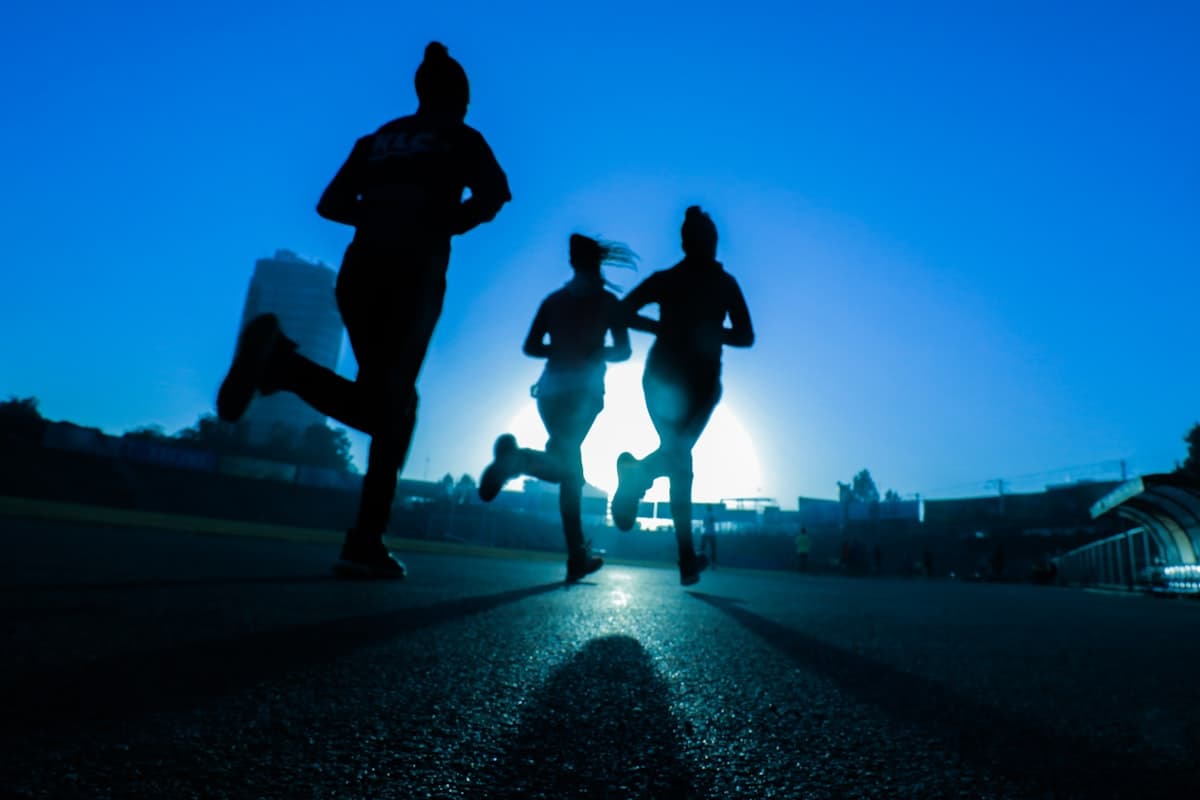
① Dehydration sharply drops your exercise capacity
Lose just 2% of your body water and your exercise capacity drops by up to 10–20%. It's common for someone who usually runs 30 minutes to not even last 20. Then your calorie burn naturally drops, too.
② The risk of muscle loss grows
When the stress hormone (cortisol) your body takes on from the heat rises, your muscle disappears more easily. The problem is that as muscle decreases, the energy you use at rest (your basal metabolic rate) drops along with it. You become a body that won't lose weight even at rest.
③ Your appetite explodes after the heat
Right after exercise your appetite drops, but a few hours later you actually end up eating more than usual. Especially in summer, you crave cold drinks, ice cream, and beer, so calories can spike easily.
⚠️ Caution
The calories-burned figure shown by an exercise app is usually displayed as more than reality. Add the post-workout reward snacks on top of that and your diet grinds to a halt. It's safer to assume you burned 20–30% less than the displayed number.
3. Summer Running Diet: The Best Times to Run
In summer, just picking the right time of day is half the battle. We compared dawn, night, and indoors.
| Time | Temp/humidity | Diet effect | Safety |
|---|---|---|---|
| Dawn (5–7 a.m.) | Coolest | ⭐⭐⭐⭐ | Safest |
| Night (9–11 p.m.) | Cool after it's cooled down | ⭐⭐⭐⭐ | Safe (mind lighting and company) |
| Midday (12–2 p.m.) | Hottest | ⭐ (intensity drops) | Dangerous |
| Indoor treadmill | Constant | ⭐⭐⭐ | Very safe |
The Hidden Diet Effect of Dawn Running
Run lightly on an empty stomach at dawn and your body starts drawing on body fat first instead of glycogen (carbohydrate in your muscles). However, running fast actually causes muscle loss, so within 30 minutes at a conversational speed (Zone 2) is safe.
For Night Running, Clothing and Course Matter
Night is nice because it's cool, but the dark cuts your visibility and raises injury risk. Bring bright-colored clothes, reflective stickers, and a head lamp, and go on a familiar course.
4. A Running Intensity Guide by Feels-Like Temperature and Humidity
The safety standard for summer running is the feels-like temperature. Look at the air temperature alone and you fall into a trap. According to the Korea Meteorological Administration's heat advisory criteria, a feels-like temperature of 33°C is a heat wave advisory, and 35°C is a heat wave warning.
| Feels-like temp | Heat stage | Recommended intensity |
|---|---|---|
| Under 28°C | Safe | Keep your usual intensity |
| 28–32°C | Caution | Lower intensity to 70%, boost hydration |
| 33–34°C | Heat wave advisory | Intensity 50%, distance and time halved |
| 35°C and up | Heat wave warning | Stop outdoor running, switch to indoor exercise |
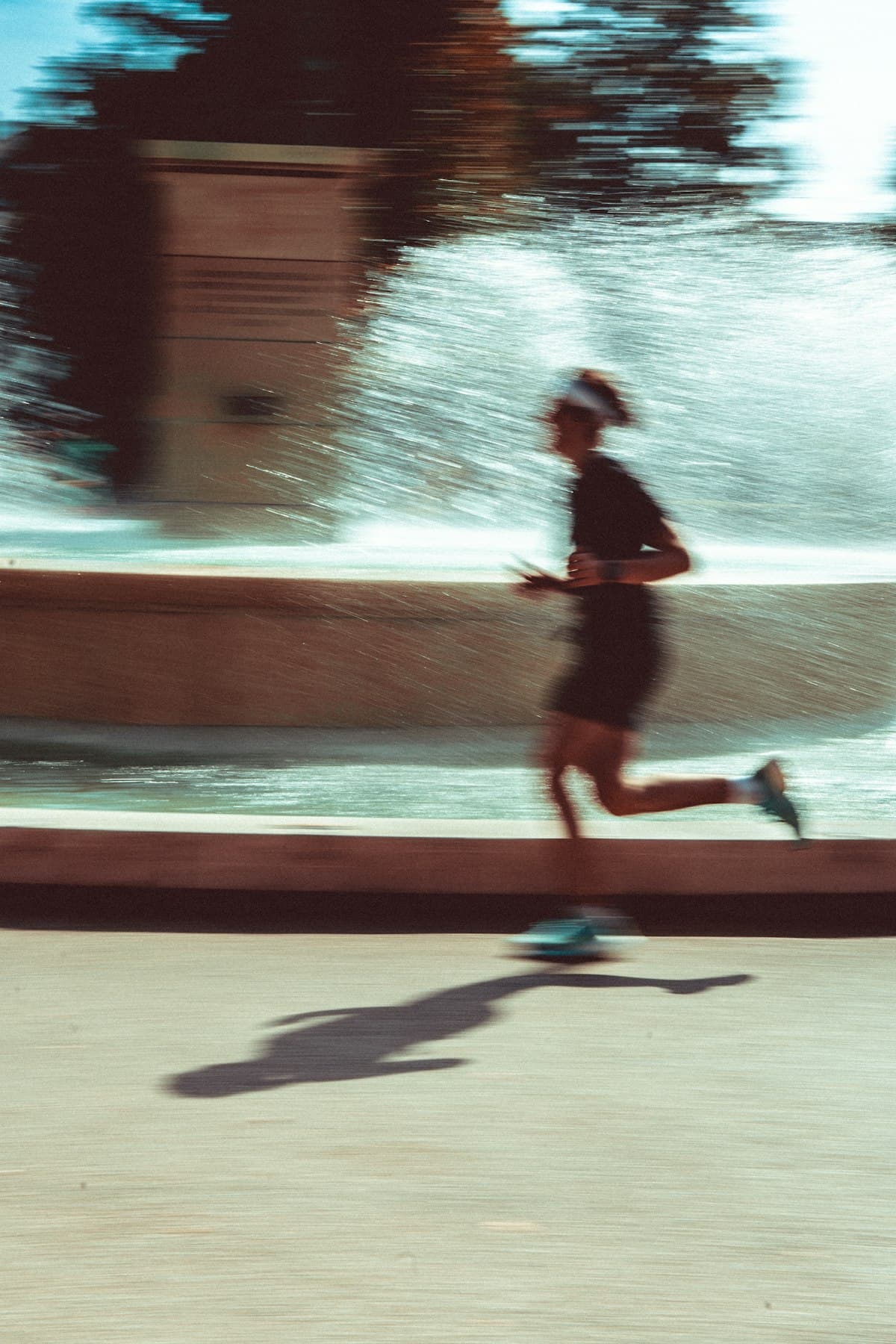
Humidity can't be ignored either. Even at the same 30°C, at 80% humidity the feels-like temperature rises above 35°C. Be sure to check the feels-like temperature in your phone's weather app before you set out.
💡 Tip
Not "it's a bit hot today" but "what's the feels-like temperature?" is the summer runner's first question. Put your weather app in favorite slot #1.
5. 5 Essentials of Summer Running Clothing
Clothing that wicks sweat well and blocks UV is exactly what protects your diet results.
- Material: Avoid cotton T-shirts. They soak up sweat and get heavy, and the friction chafes your skin. Functional polyester (CoolMax or Dri-FIT type) is the answer.
- Color: Dark colors like black and navy absorb more sunlight. White, light gray, and sky blue lower your feels-like temperature by 2–3°C.
- Hat: A brimmed cap or sun-shade hat. The crown of your head takes the most sun, so it's key to preventing heatstroke.
- Sunglasses: UV protection + glare reduction. Outdoor running fatigue drops sharply.
- Socks: If foot sweat can't escape, it causes blisters and athlete's foot. Running-specific cushioned socks or merino wool socks are good even in summer.
If your clothes cling to your skin after sweating, the size is too small or the material doesn't suit you. Check the fit too, so chafing on your knees and thighs doesn't ruin your next run. The Injury Prevention Guide also covers how to deal with friction injuries.
6. Diet and Hydration Strategy
In summer running, water is a lifeline. But if you're dieting, what you drink matters too.
A Hydration Guide for Before, During, and After Running
- 30 minutes before running: 300–500 ml of water. Don't gulp it all at once — slowly.
- During running: For runs over 30 minutes, 100–150 ml every 15 minutes. Start by wetting your mouth and gradually increase.
- After running: 1.5 times the weight you lost. If you lost 1 kg, replenish 1.5 L over 1–2 hours.
You have to drink extra in proportion to your exercise, on top of the usual recommended amount (1.5–2 L a day for adults). In summer, the water you lose through sweat can exceed 1 L an hour, so you have to consciously take in more than usual.
Water vs. Sports Drinks: A Diet Trap
Are sports drinks really necessary? For a light run within an hour, water is enough. A 500 ml commercial sports drink contains about 125 kcal and 30 g of sugar. That's refilling half the calories you burned in a 30-minute run with a sports drink.
| Drink (per 500 ml) | Calories | Sugar |
|---|---|---|
| Plain water | 0 kcal | 0 g |
| Commercial sports drink | About 125 kcal | About 30 g |
| Zero sports drink | About 0–10 kcal | 0 g |
| Iced americano | About 10 kcal | 0 g |
How to break through: For runs within an hour, water; for over an hour or on extreme-heat days, dilute a sports drink 1:1 with water. A zero-calorie sports drink is a good alternative too.
⚠️ Caution
Gulp down more than 1 L at once and you can develop hyponatremia (a state where your body's salt concentration drops too low). If you get a headache or nausea, stop immediately and have something salty or a sports drink.
7. Heatstroke Signs and Indoor Alternative Workouts
Overdo it in extreme heat and heatstroke comes. Memorize the 5 emergency signs.
- Dizziness or blurred vision
- Suddenly not sweating, with dry skin
- Nausea/vomiting
- A severe headache and a racing pulse
- Clouded consciousness or slurred speech
If even one of these appears, stop immediately, get into the shade to cool down, and replenish fluids. If symptoms are severe, you need to call 119 (emergency services). With exercise heatstroke, treatment within the 30-minute golden window can be the difference between life and death, so you mustn't hesitate.
A Calorie Comparison of Indoor Alternative Workouts
When a heat wave warning is issued, don't cling to running outdoors — move inside. Here's the calorie burn per 30 minutes (for a 60 kg person).
| Exercise | 30-min calories | Diet effect |
|---|---|---|
| Outdoor running (Zone 2) | About 280–320 kcal | ⭐⭐⭐⭐⭐ |
| Treadmill (1% incline) | About 260–300 kcal | ⭐⭐⭐⭐⭐ |
| Stair climbing | About 240–290 kcal | ⭐⭐⭐⭐ |
| Jump rope | About 300–360 kcal | ⭐⭐⭐⭐⭐ |
| Indoor cycling | About 200–250 kcal | ⭐⭐⭐ |
A treadmill is almost the same effect as outdoors. Just a 1% incline makes up for the wind resistance you get outside. Jump rope has the highest calorie burn for the time, but it's hard on the knees. If your knees are weak, we recommend indoor cycling or a treadmill.
Try it for yourself in the Wittiz app!
Frequently Asked Questions (FAQ)
In summer, is it better to run at dawn or in the evening?
Dawn is the safest. From 5–7 a.m., the temperature is lowest in the day and UV is weak. Run lightly on an empty stomach at dawn and you get the bonus of drawing on body fat first. But if dawn is hard, night (after 9 p.m.) is good too. At night, bright-colored clothes and reflective stickers are essential for visibility.
A heat wave advisory is out — can I still run outdoors?
At a feels-like temperature of 33°C (heat wave advisory), cut your intensity in half, and at 35°C (heat wave warning), stop outdoor exercise. Both are briefly possible at the coolest time, like 5–6 a.m., but during daytime hours, move indoors no matter what. Heatstroke has a 30-minute golden window, so once something goes wrong, recovery is difficult.
Will drinking lots of water in summer stop me from losing weight?
That's a misconception. Water has 0 calories, so no matter how much you drink, it won't make you gain weight. If anything, drinking enough makes your metabolism more active, which helps your diet. But gulping more than 1 L at once is hard on your stomach. It's better to drink often, 200–300 ml at a time.
Do I have to drink a sports drink?
For a light run within an hour, water is enough. A 500 ml commercial sports drink contains about 125 kcal, which is refilling half the calories you burned in a 30-minute run. Only drink a sports drink for over an hour or on extreme-heat days, and dilute it 1:1 with water or choose a zero-calorie product.
Do I lose more weight if I sweat a lot?
No. What you lose through sweat is water, not fat. It's the same as losing 1 kg in a sauna and getting it back after a cup or two of water. Real diet results are determined by calories burned − calories eaten. Sweating a lot is just a sign that you're using energy to regulate your body temperature — it's not an indicator of diet success.
Wrapping Up
The summer running diet comes down to three things: cut intensity in half above a feels-like temperature of 33°C + use dawn or night time slots + hydrate mainly with water instead of sports drinks. Add the resolve to move indoors without hesitation during a heat wave warning, and you can safely get the same diet results in summer as in spring or fall.
Start by checking this morning's feels-like temperature. At a safe time, run an easy 30 minutes — Moongti will run right alongside you!

This article was written by the Wittiz team and includes app-related content. For health-related decisions, please be sure to consult a medical professional.